
What the thoracic sling is
The horse’s front legs are not attached to the skeleton by a joint. They are suspended by muscles and fascia known as the thoracic sling. These tissues hold the ribcage up between the shoulders and allow the front end to move freely.
When the sling is weak or tight, posture collapses.
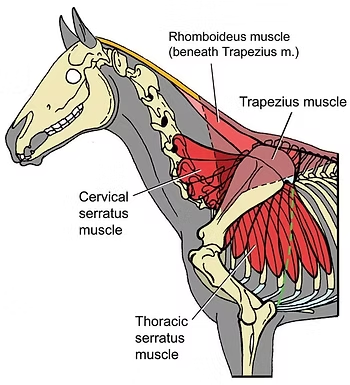
Signs of a weak or tight thoracic sling
- Hollow back
- Dropped sternum
- Heavier contact on one rein
- Shortened stride in front
- Tight or braced shoulders
- Difficulty lifting through transitions
- Soreness behind the shoulder blade
What weakens the sling
- Poor saddle fit
- Rider imbalance
- Lack of variety in work
- Compensation from hind-end issues
- Stiffness through the neck or ribcage
- Limited core engagement
How bodywork helps
Bodywork softens the tissues around the shoulder, chest and ribcage so the sling can lift properly. Movement becomes lighter, transitions become smoother and the horse finds better posture with less effort.
How you can support it
- Hill work
- Pole work
- Transitions
- Correct saddle fit
- Cross-training
- A rider who stays centered
A strong thoracic sling is the foundation of healthy movement.