
Why seniors need different support
Older horses carry years of movement patterns, tension, arthritis and wear. Their bodies do not rebound as quickly, and stiffness settles in faster. With the right support, seniors can stay comfortable and willing for a long time.
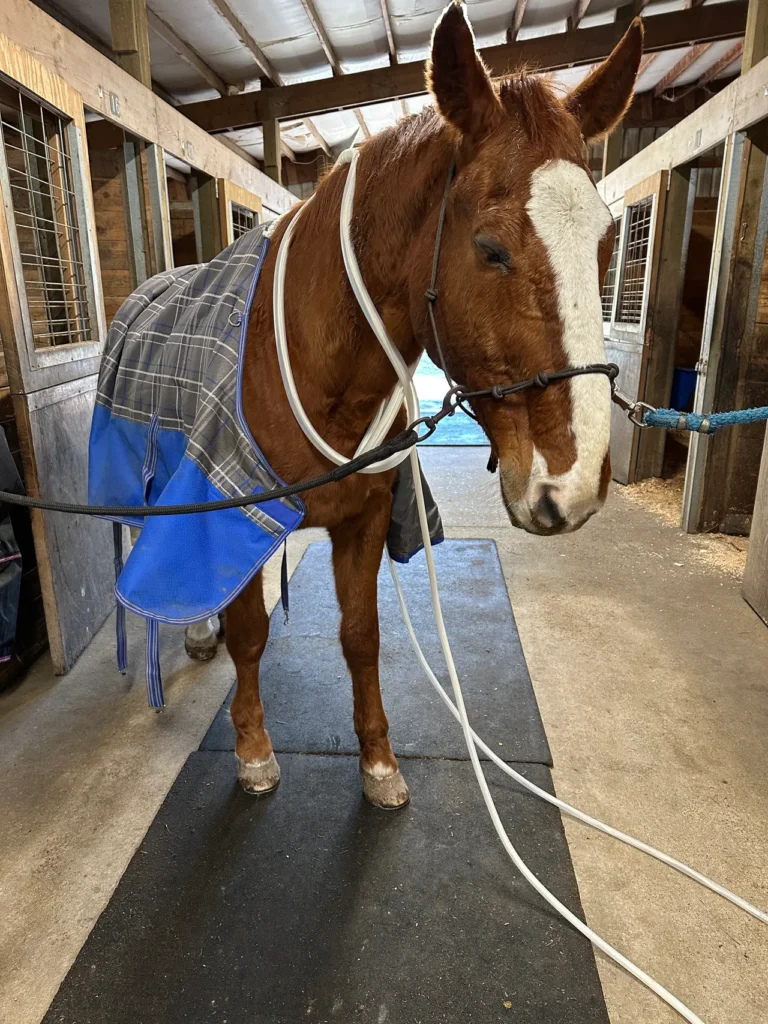
Common changes in senior horses
- Stiffness in the back, SI and hips
- Difficulty bending or warming up
- Shortened stride
- Muscle loss along the topline
- Softer hooves and lower heel strength
- Changes in ribcage and abdominal tone
- More sensitivity to cold weather
These changes are normal. The goal is not perfection. It is comfort.
How bodywork supports aging horses
Softens chronic tension
Gentle bodywork reduces long-standing tightness and helps older tissue stay elastic.
Improves mobility
Releasing fascia allows seniors to move with less resistance.
Supports posture
Posture shifts as muscles weaken. Bodywork helps realign soft tissue so they stay steadier and safer.
Encourages relaxation and comfort
Senior horses often brighten up after sessions. Comfort equals confidence.
What owners can do daily
- Slow warm-ups
- Gentle walking or hand-walking
- Consistent farrier schedule
- Warm layers in cold weather
- Thoughtful footing choices
- Light stretching if tolerated
- Good hydration and mineral balance
Tiny routines make a big difference.
When to increase frequency
- Cold weather stiffness
- Noticeable posture changes
- After time off
- More tripping or dragging toes
- New resistance under saddle
- Weight loss or muscle loss
Bottom line
Senior horses tell the truth. When they feel supported, they show you. Comfort is the goal, not making them move like they did at 6.