
Kissing spines, known medically as “dorsal spinous process impingement,” is a condition affecting horses’ backs. It occurs when the bony projections along the top of the vertebrae in the equine spine become too close or “kiss,” often in the thoracic or lumbar regions, causing discomfort and pain during movement. Symptoms of kissing spines in horses can include back pain, resistance to being saddled or ridden, reluctance to engage the hindquarters, stiffness, shortened stride, behavioral changes such as bucking, rearing, or refusing jumps, working ‘hollow’, and general poor performance.
If kissing spines is suspected in a horse, a veterinarian should be consulted for diagnosis through physical examination, palpation, and imaging like X-rays or ultrasound. Treatment options depend on the severity and may include rest, anti-inflammatory medications, injections, physical therapy, or surgical interventions in severe cases.
Post-treatment, a structured rehabilitation plan is crucial. This involves:
1. **Rest and Pain Management**: Complete rest, pain medications, electro-acupuncture, and shockwave treatment.
2. **Controlled Hand Walking**: Gradual introduction of controlled hand walking sessions on flat, even surfaces.
3. **In-Hand Exercises**: Incorporation of ground poles or cones to encourage controlled, straight-line movement and core strengthening.
4. **Introduction of Ridden Work**: Starting with short rides, ensuring proper saddle fit.
5. **Ongoing Conditioning and Maintenance**: Regular veterinary check-ups, gradual increase in workload, and cross-training activities
Core strengthening is especially important in horses with kissing spines, as it supports and stabilizes the horse’s spine and back musculature. Exercises for core strengthening include belly lifts, hill work, lateral flexion exercises, carrot or baited activations, and pole work
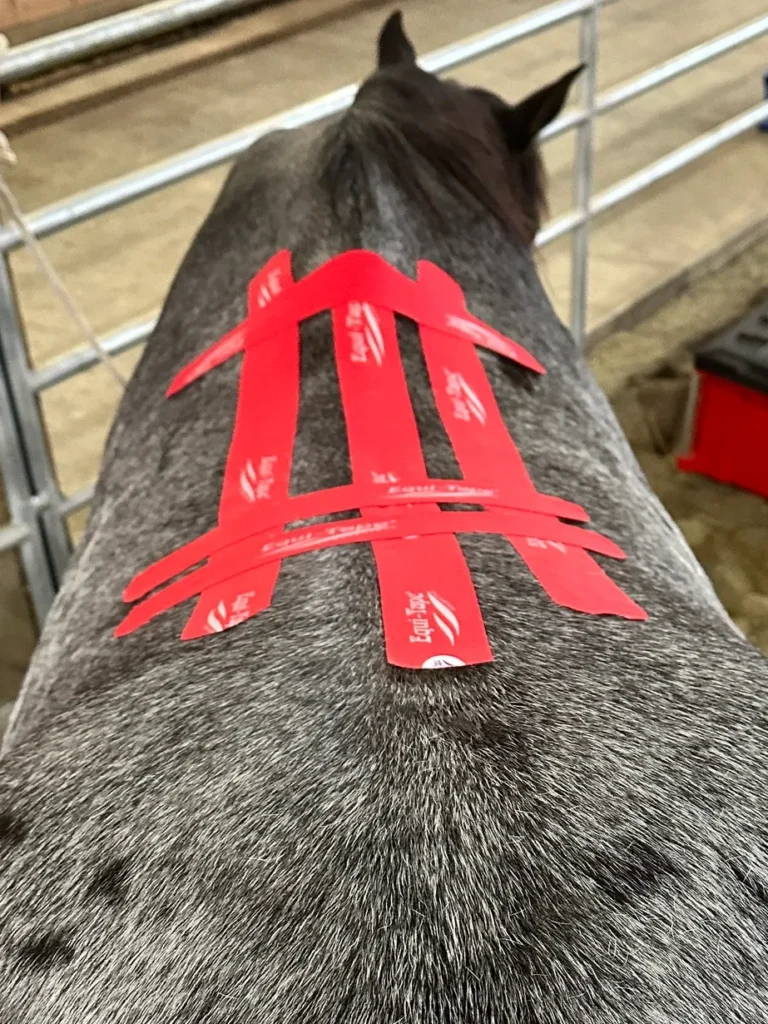
Alternative therapies like kinesiology taping and massage can also be beneficial. Kinesiology taping, which has been adapted from human to equine use, offers several benefits:
– Does not restrict range of motion while providing stability and support.
– Lifts the skin, enabling increased blood flow, oxygenation, and decreased inflammation.
– Decreases muscle spasms, tension, soreness, and edema.
– Provides support to tendons, ligaments, and joints
Massage therapy, as part of veterinary physical therapy, accelerates healing, reduces scar tissue formation, offers pain relief, increases suppleness, flexibility, joint range of motion, stride length, and improves proprioception and straightness.
For a comprehensive guide on exercises and stretches for rehabilitating horses with kissing spines, consider the course “Evidence-Based Rehabilitation for Equine Kissing Spines.” It covers functional anatomy, biomechanics, pathology, pain management, core muscle function, neuromotor control, movement retraining, electrotherapies, and specific exercises for each rehabilitation phase. You can find more information about this course [here]
This book by Jec Aristotle Ballou
55 Corrective Exercises for Horses: Resolving Postural Problems, Improving Movement Patterns, and Preventing Injury
EquiCore EquiBand to improve core strength and posture.