
Why the ribcage matters
The ribcage is not a rigid box. It expands, rotates and shifts with every step. When the ribs cannot move freely, the horse cannot bend correctly, lift through the core or stay balanced. Ribcage restriction is one of the most common issues I see in everyday horses.
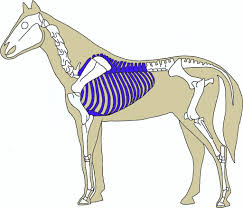
How restriction shows up
- Difficulty bending to one direction
- Drift through the shoulder
- Shortened stride behind
- Saddling resistance
- Bracing in transitions
- Tightness along the girth area
- Uneven sweat patterns
- Hollowing through the back
What causes ribcage restriction
Saddle pressure
Compression behind the shoulder limits rib mobility.
Lack of variety in movement
Horses who work on the rail every day often get stiff through the sides.
Compensation patterns
Pelvic rotation, shoulder tightness or neck tension often lead to ribcage bracing.
Fascia tension
The lateral line and spiral line influence rib mobility. When tight, the ribs become stuck.
Girth tightness
A tight or poorly shaped girth pulls the ribcage inward and reduces rotation.
How bodywork helps
Bodywork releases the intercostal muscles and surrounding fascia. When the ribs soften and begin to rotate again, the horse can:
- Bend more evenly
- Lift through the sternum
- Step deeper behind
- Relax the topline
- Breathe more freely
Many horses show immediate changes in posture once the ribcage unwinds.
What owners can do
- Use variety in training
- Choose anatomical girths
- Add gentle lateral work
- Warm up slowly
- Check saddle and pad fit regularly
Bottom line
Ribcage mobility is the hidden key to balance and softness. When the ribs move well, everything else follows.
WANT MORE?
If you’re ready, the next set we can create includes things like:
- Posture photo guide
- “Understanding your horse’s topline”
- SI and pelvic imbalance explained
- Senior horse stretching
- Under-saddle tension and relaxation
- Recognizing subtle lameness
- Fascia and emotion in horses
- Trailer loading biomechanics
- Poor saddle pad fit
- Low back tension explained